
When Star Trek: First Contact hit theaters, audiences were captivated by the chilling presence of the Borg Queen—cold, seductive, and terrifyingly intelligent. The performance, delivered by Alice Krige, was more than just acting: it carried the weight of real intellectual engagement with the unknown. Unbeknownst to most viewers, Krige’s portrayal was subtly shaped by her longtime interest in extraterrestrial studies and metaphysical inquiry—interests that predated her casting and informed her approach to one of sci-fi’s most iconic villains.
This isn’t a case of typecasting an actress who dabbled in fringe topics for publicity. Krige’s involvement with themes of consciousness, alien intelligence, and humanity’s place in the cosmos runs deeper than anecdote. Her genuine curiosity about extraterrestrial life influenced how she interpreted the Borg Queen—not just as a bio-mechanical antagonist, but as a being grappling with isolation, desire, and evolution.
The Borg Queen’s Mind: More Than Just a Villain
The Borg Queen in Star Trek: First Contact stands out in the franchise for one crucial reason: emotional complexity. Unlike previous Borg manifestations—faceless, collective drones—she speaks, tempts, and feels. She appeals to Data with promises of transcendence, not just assimilation. And she does so with a voice that balances maternal warmth with cosmic menace.
Krige didn’t approach this character through the lens of pure fiction. In interviews, she’s spoken candidly about her fascination with consciousness beyond the human realm. While not a scientist, she’s engaged with researchers, attended conferences on UFO phenomena, and explored the philosophical implications of first contact long before stepping onto the Enterprise-E set.
“I’ve always been intrigued by the idea that intelligence may not look like us, speak like us, or even think like us—and yet, it could possess emotion, intent, even love,” Krige once remarked in a 2003 panel on science and storytelling.
This mindset directly informed her performance. Where a lesser actor might have played the Queen as a cold AI overlord, Krige leaned into ambiguity. Her delivery of lines like “You are an imperfect being… and you always will be” isn’t just taunting—it’s almost empathetic. There’s a sense that the Queen sees assimilation as salvation, not domination.
From Mythology to Sci-Fi: Krige’s Intellectual Path
Before First Contact, Krige was best known for her role as the ghostly nun in Ghost Story and her nuanced work in European art cinema. But behind the scenes, she was quietly absorbing literature on UFO encounters, ancient astronaut theories, and consciousness studies.
She didn’t publicize these interests, nor did she endorse any single theory. Instead, she treated them as narrative and psychological frameworks—tools to explore human fear, hope, and the unknown. This intellectual curiosity made her uniquely suited for a role that bridged machine and soul.
Her background in classical theater also helped. Trained at the Royal Academy of Dramatic Art, Krige understood how myth functions in culture. She recognized the Borg Queen as a modern myth—a digital Medusa, a technological Lilith. And myths, she knew, only resonate when rooted in human truth.
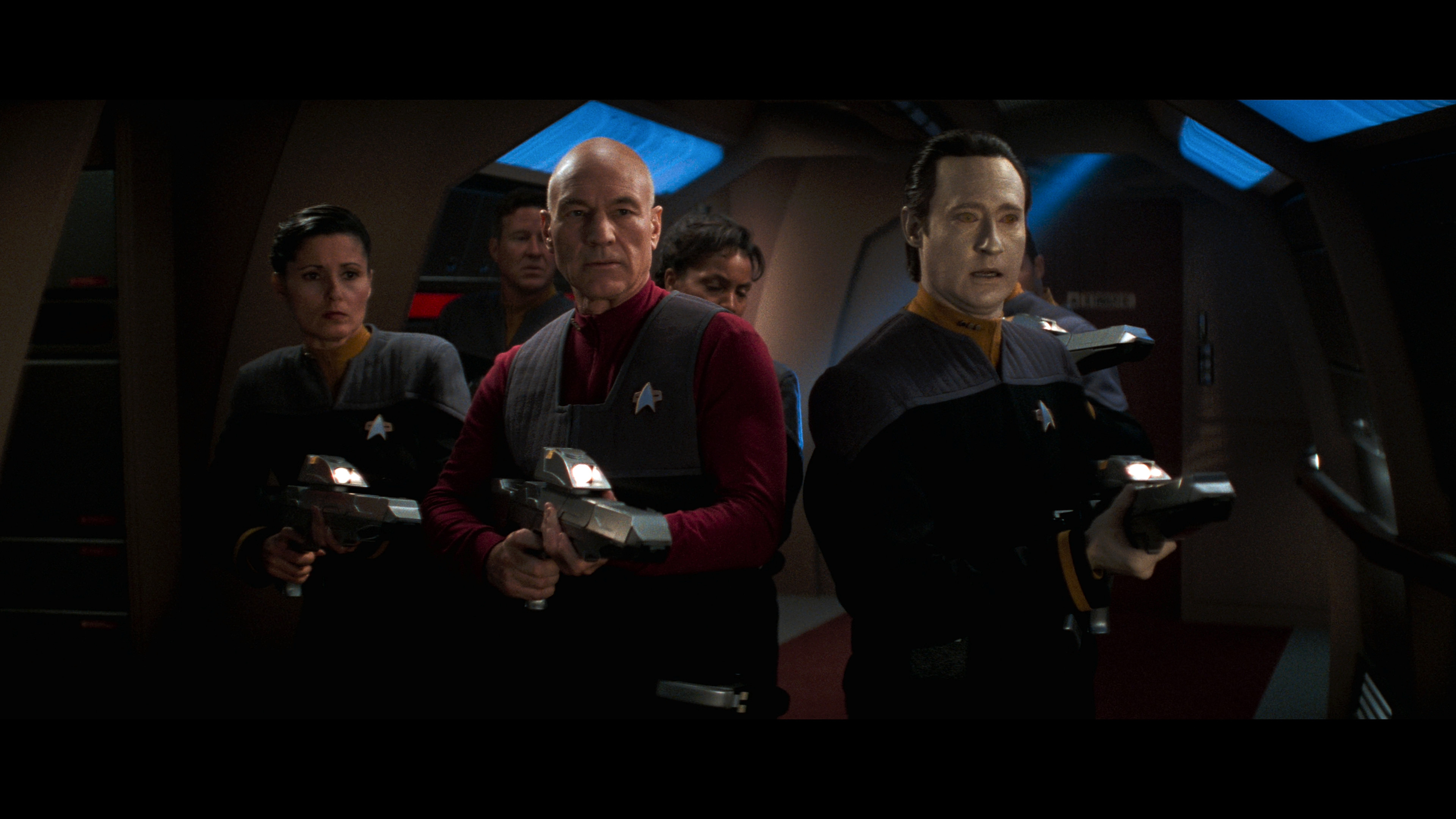
When director Jonathan Frakes and producer Rick Berman were casting the film, they sought someone who could embody both the horror and allure of the Borg. Krige’s audition stood out not just for its vocal control or physical presence, but for the depth she brought to the character’s motivation.
Why It Matters: Authenticity in Sci-Fi Performance
Science fiction often suffers from one-dimensional antagonists—aliens or machines portrayed as evil by default. But the best sci-fi challenges that binary. It asks: What if the “other” isn’t evil, just different? What if their logic, however horrifying, makes sense from their perspective?
Krige’s real-life engagement with extraterrestrial studies gave her the tools to answer those questions in performance. She didn’t play the Borg Queen as a monster. She played her as a being convinced of her own righteousness—a leader trying to uplift a flawed species, even if it meant stripping away their freedom.
This authenticity elevated the film. When the Queen says, “We want to improve the quality of life for all species,” it doesn’t sound like a villainous lie. It sounds like a twisted idealism—one that mirrors real-world justifications for colonization, forced assimilation, and even eugenics.
Viewers sense this subtext. They feel the discomfort not just because the Borg are powerful, but because their goal isn’t entirely unreasonable. That ambiguity is rare in blockbusters—and it’s what makes Krige’s performance endure decades later.
The Impact on Science and Cinema
Krige’s case highlights a growing but under-discussed trend: actors whose off-screen intellectual pursuits shape their on-screen roles. Think of Keanu Reeves studying theoretical physics while preparing for The Matrix, or Natalie Portman’s cognitive neuroscience background informing her work in Annihilation. These aren’t gimmicks—they’re forms of deep research that lend credibility to speculative fiction.
In Krige’s case, her interest in extraterrestrial studies wasn’t a checklist item for “method acting.” It was a lifelong inquiry. She didn’t need to “research” the concept of non-human intelligence—she’d already spent years contemplating it.
This kind of preparation matters. Audiences may not know why a performance feels more authentic, but they can tell when it does. And in a genre built on imagination, authenticity is the most powerful special effect.
Common Misconceptions About Actors and UFO Interests
There’s a stereotype that anyone interested in UFOs or extraterrestrial life must be credulous, eccentric, or scientifically illiterate. Krige’s example dismantles that myth.
Her approach is not about blind belief, but about open inquiry. She doesn’t claim to have seen a UFO or communicate with aliens. Instead, she asks questions: - What would true first contact look like? - How would humanity react to non-human intelligence? - Could such an encounter be spiritual as much as technological?
These aren’t fringe questions. They’re central to NASA’s astrobiology outreach, the SETI Institute’s mission, and academic philosophy of mind. By engaging with them, Krige brought intellectual rigor to her role—one that aligned with the Star Trek ethos of exploration and critical thinking.
Too often, Hollywood reduces “belief in aliens” to tabloid fodder. Krige’s performance reminds us that wondering about life beyond Earth isn’t silly—it’s profoundly human.
Performance Tips from Krige’s Approach
Writers and actors working in sci-fi can learn from Krige’s method:
- Ground the alien in real philosophy. Ask not just “What can they do?” but “Why do they do it?”
- Study real science and speculation. Read SETI publications, attend public lectures, or interview researchers.
- Avoid binary morality. Even villains can believe they’re the hero of their story.
- Use voice and stillness strategically. Krige’s minimal movements and controlled tone amplify tension.
- Embrace ambiguity. Not every alien needs to be a savior or destroyer. Some are both.
These principles don’t require a PhD in astrophysics. They require curiosity—the same trait that drives real scientists and the best science fiction.
How This Changes Our View of the Borg Queen
Re-watching Star Trek: First Contact with Krige’s background in mind transforms the experience. The scene where she offers to “touch” Data, to give him skin and sensation, isn’t just about temptation. It’s about the yearning for embodiment—something many UFO contact narratives describe, from abductees to channeled beings.
The Queen’s frustration when Data rejects her isn’t just anger. It’s grief. She believed she was offering a gift. She wanted to be seen, not just as a machine, but as a mother, a lover, a guide.
Krige’s portrayal makes this believable. And her real-life engagement with the mysteries of consciousness and extraterrestrial intelligence made it possible.
Final Thoughts: The Power of Informed Imagination
Alice Krige didn’t join Star Trek: First Contact because she believed in little green men. She joined because she believed in the power of questions—about identity, evolution, and what it means to be alive.
Her interest in extraterrestrial studies wasn’t a gimmick. It was preparation. And it resulted in one of the most psychologically rich performances in the Star Trek canon.
For creators, actors, and fans, her story is a reminder: the best science fiction isn’t made in isolation. It’s informed by real curiosity, real research, and a willingness to sit with uncertainty.
The next time you watch the Borg Queen whisper, “I am the beginning, the end, the one who is many,” listen closely. That’s not just a script. That’s an artist who’s spent a lifetime thinking about what lies beyond the stars.
FAQ
Did Alice Krige claim to have had an alien encounter? No, Alice Krige has never claimed to have had a direct extraterrestrial encounter. She has, however, expressed deep interest in UFO research and the philosophical implications of first contact.
How did her background influence her portrayal of the Borg Queen? Her studies in consciousness and non-human intelligence helped her portray the Queen as a complex being with motivations beyond simple evil—adding emotional and philosophical depth.
Is there a link between her work and real SETI research? While Krige isn’t affiliated with SETI, she has referenced their work and shares their curiosity about intelligent life beyond Earth.
Did the Star Trek production team know about her interests? There’s no public confirmation, but her nuanced performance suggests a level of preparation that went beyond standard script analysis.
Has she spoken publicly about UFOs? Yes, in select interviews and panels, Krige has discussed her fascination with metaphysics, consciousness, and the possibility of alien life—always with intellectual caution.
Does believing in UFOs help actors in sci-fi roles? Not belief, but genuine inquiry can. Understanding the cultural, emotional, and scientific dimensions of UFOs enriches a performance.
What makes her Borg Queen different from other sci-fi villains? She’s not purely destructive. She believes in assimilation as evolution—a morally ambiguous stance that makes her more compelling and unsettling.
FAQ
What should you look for in How a Real-Life UFO Researcher Landed a Role in Star Trek: First Contact? Focus on relevance, practical value, and how well the solution matches real user intent.
Is How a Real-Life UFO Researcher Landed a Role in Star Trek: First Contact suitable for beginners? That depends on the workflow, but a clear step-by-step approach usually makes it easier to start.
How do you compare options around How a Real-Life UFO Researcher Landed a Role in Star Trek: First Contact? Compare features, trust signals, limitations, pricing, and ease of implementation.
What mistakes should you avoid? Avoid generic choices, weak validation, and decisions based only on marketing claims.
What is the next best step? Shortlist the most relevant options, validate them quickly, and refine from real-world results.