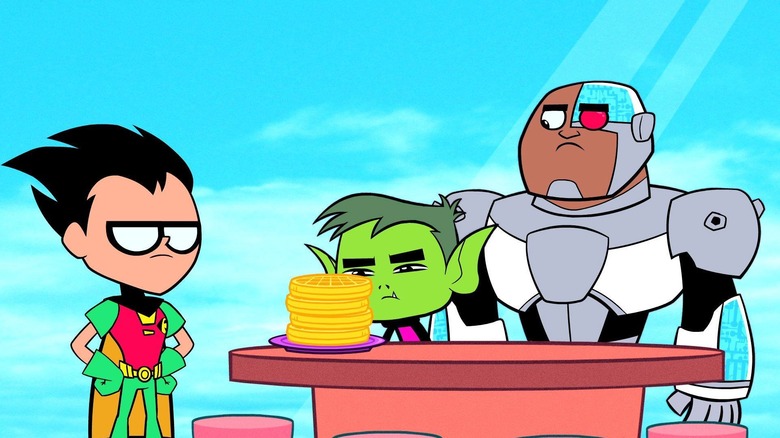
Greg Cipes, the voice behind Beast Boy in Teen Titans Go!, has once again thrust himself—and the franchise—into the center of a heated debate. What began as a quiet corner of animation fandom has erupted into a full-blown discourse after Cipes made pointed remarks about his role, production changes, and alleged behind-the-scenes tensions. Fans are divided, networks are silent, and the legacy of one of Cartoon Network’s most enduring series is suddenly under scrutiny.
This isn’t new drama—it’s old wounds being salted. For years, rumors have circulated about cast treatment, creative direction, and the surprising longevity of Teen Titans Go! over its more critically acclaimed predecessor, Teen Titans (2003). But Cipes’ recent comments have done more than remind fans of past grievances—they’ve challenged the very narrative Cartoon Network has maintained for over a decade.
The Spark: What Greg Cipes Said
During a recent podcast appearance, Cipes addressed the evolution of Teen Titans Go!, stating, “We weren’t supposed to be doing this show anymore. Not this version. It was supposed to wrap.” He went on to imply that creative control had shifted dramatically, with voice actors increasingly sidelined in decisions that directly impacted their characters.
More controversially, Cipes suggested that cast members weren’t consulted about major changes—including rumored lineup shifts and character reboots—and that some felt “disposable” as production priorities leaned more on corporate synergy than storytelling.
While he didn’t explicitly confirm his own firing, his tone and phrasing fueled speculation: “They move fast. Sometimes you’re on the train. Sometimes you’re watching it leave.”
Fans dissected every syllable. Was this a veiled confirmation he’s no longer part of future projects? Did Cartoon Network cut ties quietly? Or is this a veteran actor expressing frustration over evolving industry norms?
Why Fans Are Reacting So Strongly
Teen Titans Go! has always been polarizing. Launched in 2013, it replaced the dramatic, action-heavy Teen Titans with a comedic, absurdist tone. Longtime fans of the original series felt alienated. Others embraced the humor and accessibility. But despite criticism, the show became a ratings juggernaut—spawning toys, theme park rides, and a massive YouTube presence.
Beast Boy, voiced by Cipes since 2003, has been a consistent thread through both eras. His irreverent, goofy, but emotionally grounded portrayal made him a fan favorite. For many, Cipes is Beast Boy.
Now, the prospect of recasting—or sidelining—him feels like erasing a legacy.
Social media erupted after the podcast. Hashtags like #KeepCipes and #BeastBoyForever trended. Petitions circulated. YouTube compilations of Cipes’ most iconic lines resurfaced with millions of views. Some fans accused Cartoon Network of prioritizing profit over loyalty. Others argued that voice actors in long-running cartoons often rotate—why is this different?
But the emotional core is clear: this isn’t just about one actor. It’s about respect, continuity, and the soul of a franchise that shaped a generation.
Cartoon Network’s Silence Speaks Volumes
As of now, Cartoon Network has not officially commented on Cipes’ remarks or the status of his involvement. Warner Bros. Animation, which produces the series, also remains silent.
This silence is telling. In an era where studios issue PR statements over minor controversies, the lack of response suggests either internal uncertainty or a strategic decision to avoid amplifying the situation.
But silence doesn’t quell rumors—it fuels them.
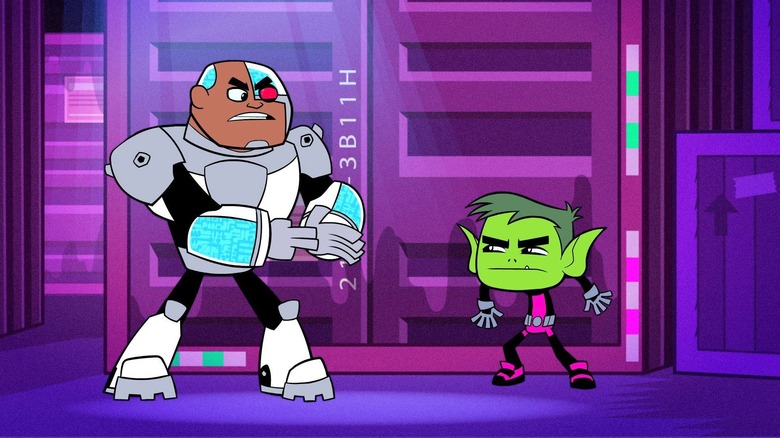
Insiders suggest that Teen Titans Go! is undergoing a gradual transition. New episodes are reportedly scaling back on long-standing cast members in favor of younger, cheaper voice talent. Animated shorts and digital content are shifting toward broader, meme-friendly humor that relies less on character depth and more on viral potential.
Is this a cost-cutting move? A rebrand? Or the natural end of a 20-year run?
Without transparency, fans are left to speculate. And speculation breeds distrust.
Behind the Scenes: Voice Acting in Modern Animation
Cipes’ situation reflects a larger shift in the animation industry. Where voice actors once had long-term contracts and creative input, many modern cartoons—especially those targeting younger audiences—operate on tighter budgets and faster turnaround times.
Consider these realities:
- Streaming economics: With platforms prioritizing volume, shows like Teen Titans Go! churn out 20–40 episodes per year. This pace leaves little room for nuanced performance or actor involvement.
- Licensing and reuse: Digital voice models and archival recordings are increasingly used to maintain character consistency without rehiring actors.
- Union vs. non-union work: While Cipes is likely covered under SAG-AFTRA, many newer hires work non-union gigs, making them more replaceable.
Cipes, who also voices Kevin Levin in Ben 10 and Rad in Transformers: EarthSpark, represents a generation of voice actors who helped elevate the craft. His potential sidelining isn’t just personal—it’s symbolic.
“When you’ve played a character for 20 years, you’re not just reading lines. You’re parenting them. And when the studio stops asking for your input, it feels like they’re saying your parenting doesn’t matter.”
That sentiment, echoed in private forums and public posts, captures the heart of the backlash.
Could Beast Boy Be Recast?
Recasting is not unprecedented. SpongeBob SquarePants recast the voice of Squidward after the original actor’s passing. Family Guy quietly replaced Patrick Warburton with Seth Green for a minor character. Even Batman: The Animated Series saw multiple voices across decades.
But recasting works best when it’s handled with care—and when fans are prepared.
Replacing Greg Cipes as Beast Boy would be high-risk. Unlike characters with numerous voice iterations (e.g., Batman), Beast Boy’s modern identity is inextricably tied to Cipes. His laugh, his delivery, his ad-libs—they’ve defined the character for two generations.
A recast without fan buy-in could backfire spectacularly.
Imagine a new voice in a Teen Titans movie or game. Longtime fans might reject it outright. Streaming algorithms could detect negative engagement, impacting future greenlights. Merchandise sales might dip. The ripple effects are real.
Alternatively, Cartoon Network could:
- Introduce a “passing the torch” storyline, where Beast Boy mentors a younger character voiced by a new actor.
- Use Cipes’ likeness and archived audio for limited appearances.
- Officially retire the character with dignity.
But none of this happens without communication.
Lessons from Other Animation Franchises
Other studios have navigated similar waters—with mixed results.
Avatar: The Last Airbender / The Legend of Korra
When the sequel series The Legend of Korra launched, it introduced new characters while keeping original voice actors for cameos. The transition respected legacy while allowing evolution. Fans appreciated the continuity.
Adventure Time After years of acclaim, Adventure Time concluded cleanly, with a finale that honored its cast and crew. When spin-offs emerged, they acknowledged the past without relying on it. No recasts. No drama.

Rick and Morty Amid contract disputes, Justin Roiland was replaced as the voice of both leads. Despite backlash, Adult Swim moved forward with new actors, citing “creative differences.” The show continues—but ratings and fan sentiment have never fully recovered.
The lesson? Handling cast changes with transparency and narrative integrity is key. Ignoring fan attachment is a gamble.
What This Means for the Future of Teen Titans
Teen Titans Go! isn’t ending anytime soon. Its merchandise sales, YouTube shorts, and international syndication ensure its survival. But its cultural relevance is shifting.
If Cartoon Network intends to modernize the franchise, it must do so thoughtfully. That means:
- Acknowledging the contributions of long-time cast members.
- Involving actors in transition plans.
- Creating story arcs that honor legacy while introducing new voices.
Otherwise, they risk alienating the core audience that built the franchise.
There’s also the unspoken possibility: a revival of the original Teen Titans tone. With Young Justice experiencing a renaissance on HBO Max, and adult animation on the rise, a dramatic reboot could resonate strongly.
But without Greg Cipes—or without acknowledging his impact—that reboot would feel incomplete.
Moving Forward: What Fans Can Do
Outrage alone won’t change studio decisions. But organized, respectful engagement can.
Fans who want to preserve Cipes’ role—or at least ensure a proper send-off—can:
- Support official merchandise and episodes featuring the current cast.
- Tag Cartoon Network and Warner Bros. Animation with constructive messages (not harassment).
- Create and share positive content highlighting Cipes’ contributions.
- Engage with industry coverage by reputable animation news outlets.
- Join fan coalitions pushing for voice actor recognition.
Petitions and hashtags are useful, but sustained attention matters more.
A Legacy at a Crossroads
Greg Cipes didn’t just voice Beast Boy—he helped shape him. From slapstick comedy to rare moments of vulnerability, his performance carried emotional weight even in a cartoon built on jokes.
Now, as rumors swirl and silence prevails, we’re forced to ask: what do we value in our animated icons?
Is it the character alone? Or the human voice that brought them to life?
Cartoon Network has a choice. It can treat this as a quiet transition—or a moment of legacy celebration. It can honor an actor who helped define a generation of animation or risk being seen as discarding talent in pursuit of efficiency.
For fans, the message is clear: voices matter. Not just on screen—but behind it.
FAQ
Did Greg Cipes get fired from Teen Titans Go? There is no official confirmation. Cipes made ambiguous remarks suggesting reduced involvement, but Cartoon Network has not announced his departure.
Who voices Beast Boy in Teen Titans Go? Greg Cipes has been the primary voice of Beast Boy since 2003 across both Teen Titans and Teen Titans Go!.
Why are fans upset about potential recasting? Cipes has portrayed Beast Boy for 20 years. Fans see his voice as inseparable from the character’s identity, especially in emotional or iconic scenes.
Has Cartoon Network responded to the controversy? No official statement has been released by Cartoon Network or Warner Bros. Animation.
Can voice actors be replaced easily in cartoons? While possible, replacing a long-standing voice actor risks alienating fans, especially when the performance is deeply associated with the character.
Is Teen Titans Go ending? No. The show remains in production with new episodes and digital content continuing to release.
Could the original Teen Titans return? While unconfirmed, fan demand for a return to the original tone has grown, especially with the success of similar reboots in animation.
FAQ
What should you look for in Beast Boy Actor Sparks Backlash in Teen Titans Go Drama? Focus on relevance, practical value, and how well the solution matches real user intent.
Is Beast Boy Actor Sparks Backlash in Teen Titans Go Drama suitable for beginners? That depends on the workflow, but a clear step-by-step approach usually makes it easier to start.
How do you compare options around Beast Boy Actor Sparks Backlash in Teen Titans Go Drama? Compare features, trust signals, limitations, pricing, and ease of implementation.
What mistakes should you avoid? Avoid generic choices, weak validation, and decisions based only on marketing claims.
What is the next best step? Shortlist the most relevant options, validate them quickly, and refine from real-world results.